Enterprise Data Governance

DataVerse

Making enterprise data findable and governable.

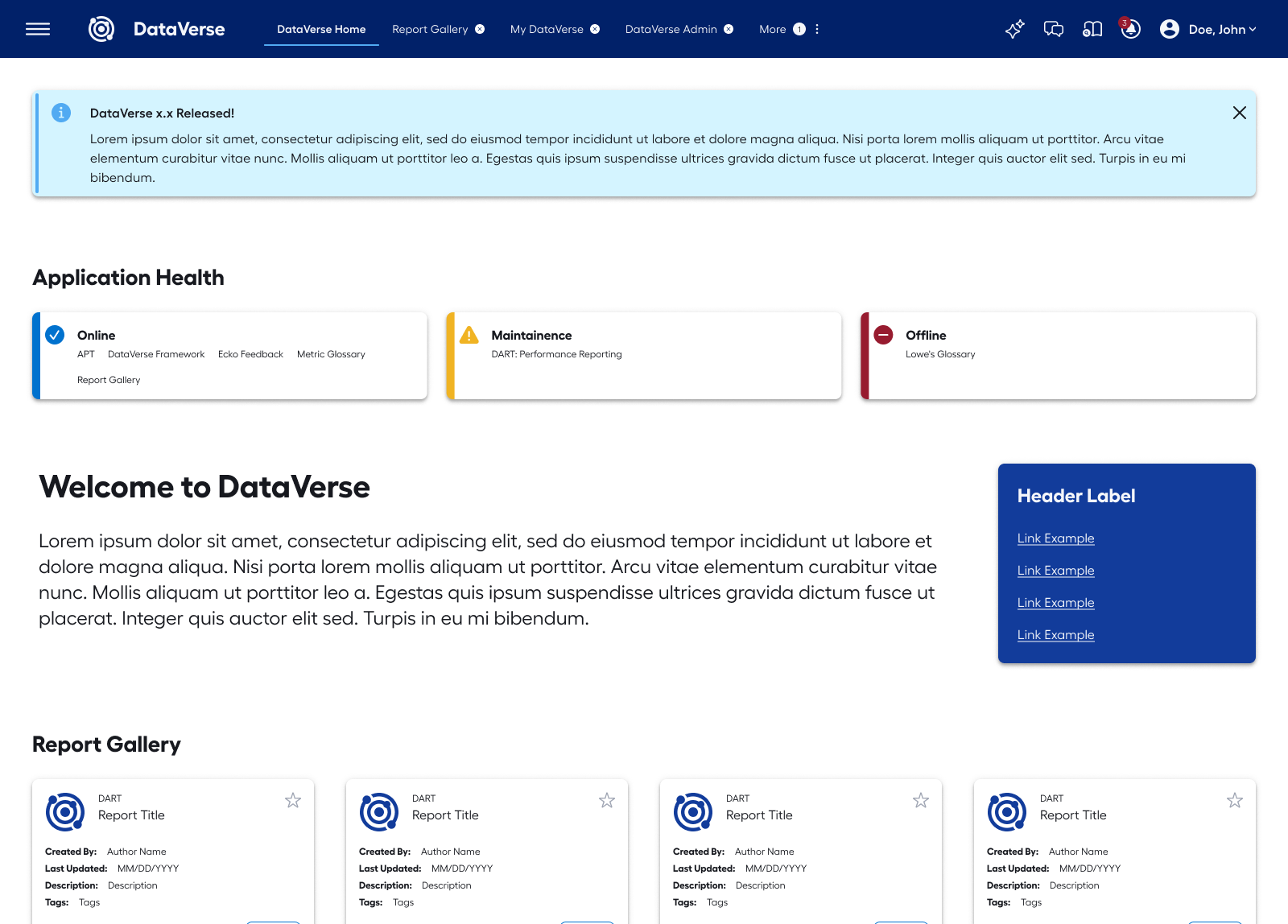
DataVerse unified Lowe's fragmented reporting ecosystem into one governed experience where teams can find trusted metrics, understand definitions, and act faster with AI-assisted guidance.

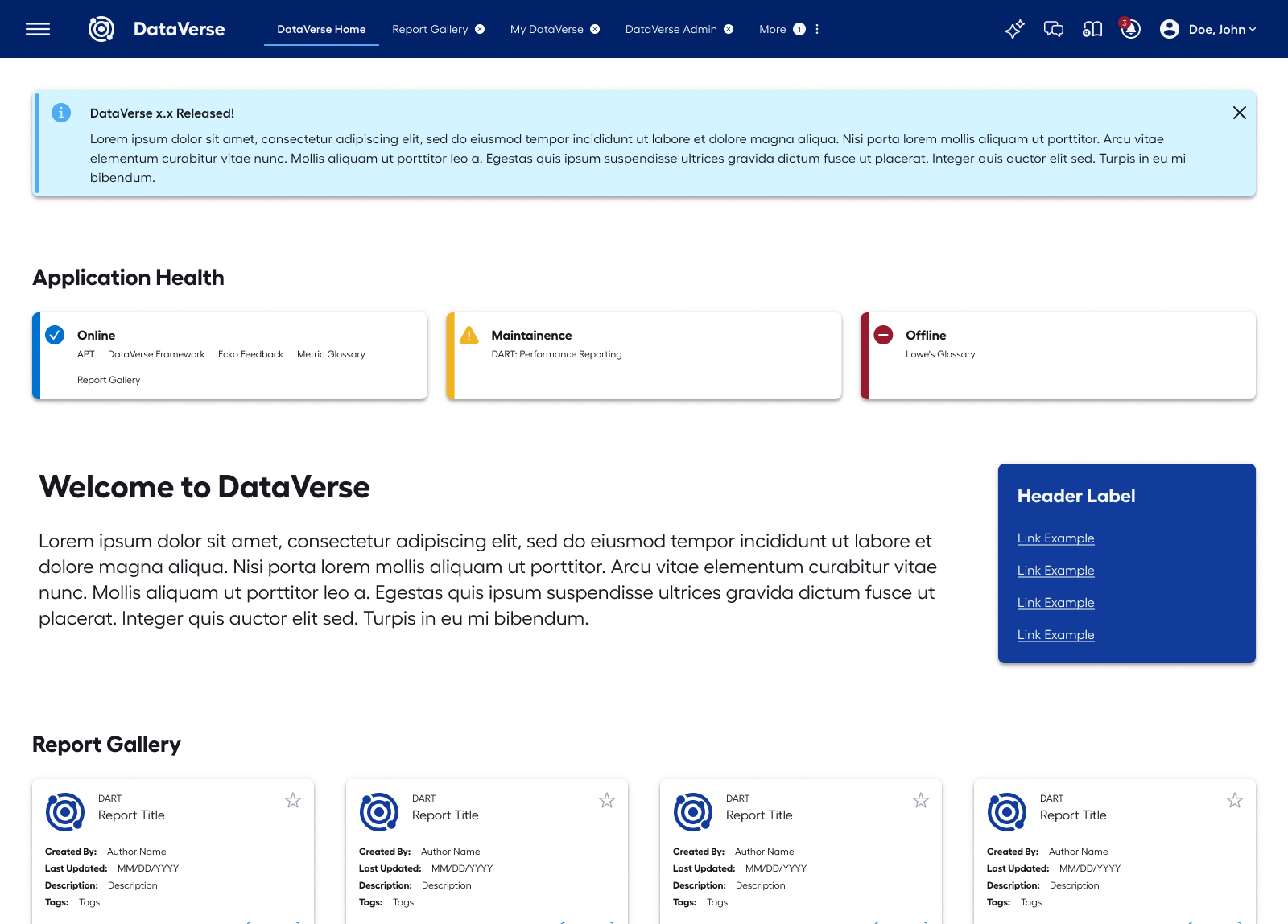
Updated DataVerse homepage with application health, curated reports, and navigation to core modules

Note on data: All values shown are illustrative and do not represent actual company data.

The Conflict

Fixing the Trust Gap in Enterprise Data

Associates had access to data, but not confidence in it. Metrics lived across disconnected tools, definitions varied by team, and reporting workflows were hard to navigate. Teams spent too much time validating numbers and too little time making decisions.

The Blueprint

Architecting End-to-End Decision Flows

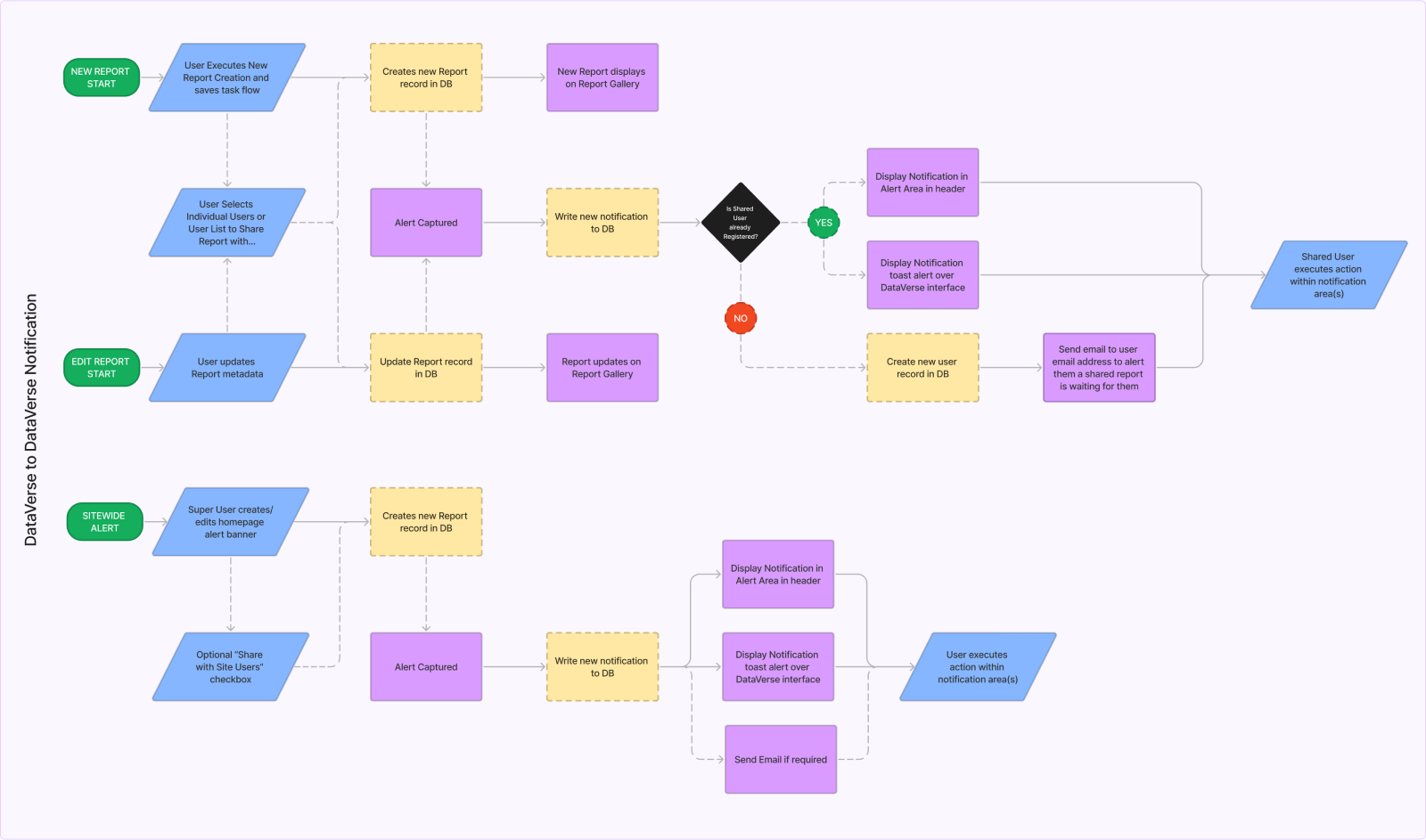
I mapped the operational logic behind DataVerse, including this example for how notifications are triggered, routed, and surfaced across teams. This blueprint defined who gets alerted, when channels switch between in-app and email, and how actions propagate, so users can move from signal to resolution without breaking flow.

DataVerse notifications view showing update alerts and workspace activity
Structural Organization

From Fragmented Tools to Guided Navigation

A single dashboard could not serve discovery, governance, and personal work equally well. I separated those needs into a clear progression from finding trusted reports to managing owned work, giving users predictable access to definitions, ownership context, and governance controls without overloading the homepage.

User Centric Views

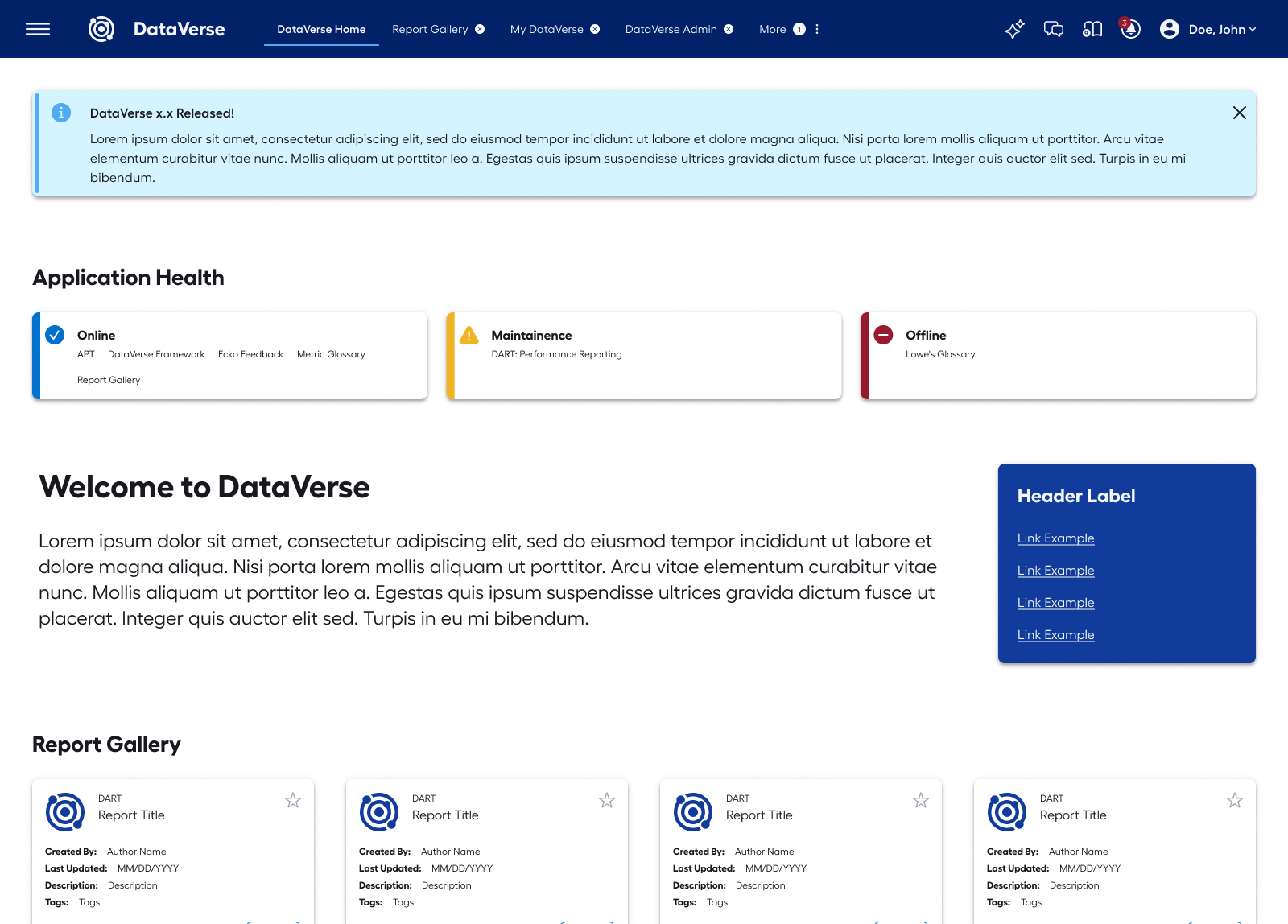
DataVerse Home Screen view
The Turning Point

Operationalizing Trust with a Metric Glossary

Users could already access reports; the harder problem was deciding whether the metrics inside them meant the same thing across teams. That changed the priority from adding more dashboard content to introducing a centralized Metric Glossary directly inside the workflow. Users could validate definitions in context, reducing interpretation drift without creating another destination to manage.

01 / Live Source Health

Status indicators for glossary and reporting streams so users can immediately see whether definitions are current and available.

02 / Standardized Language

A searchable definition layer that aligns teams on shared terms, including core metrics like revenue, margin, and forecast variance.
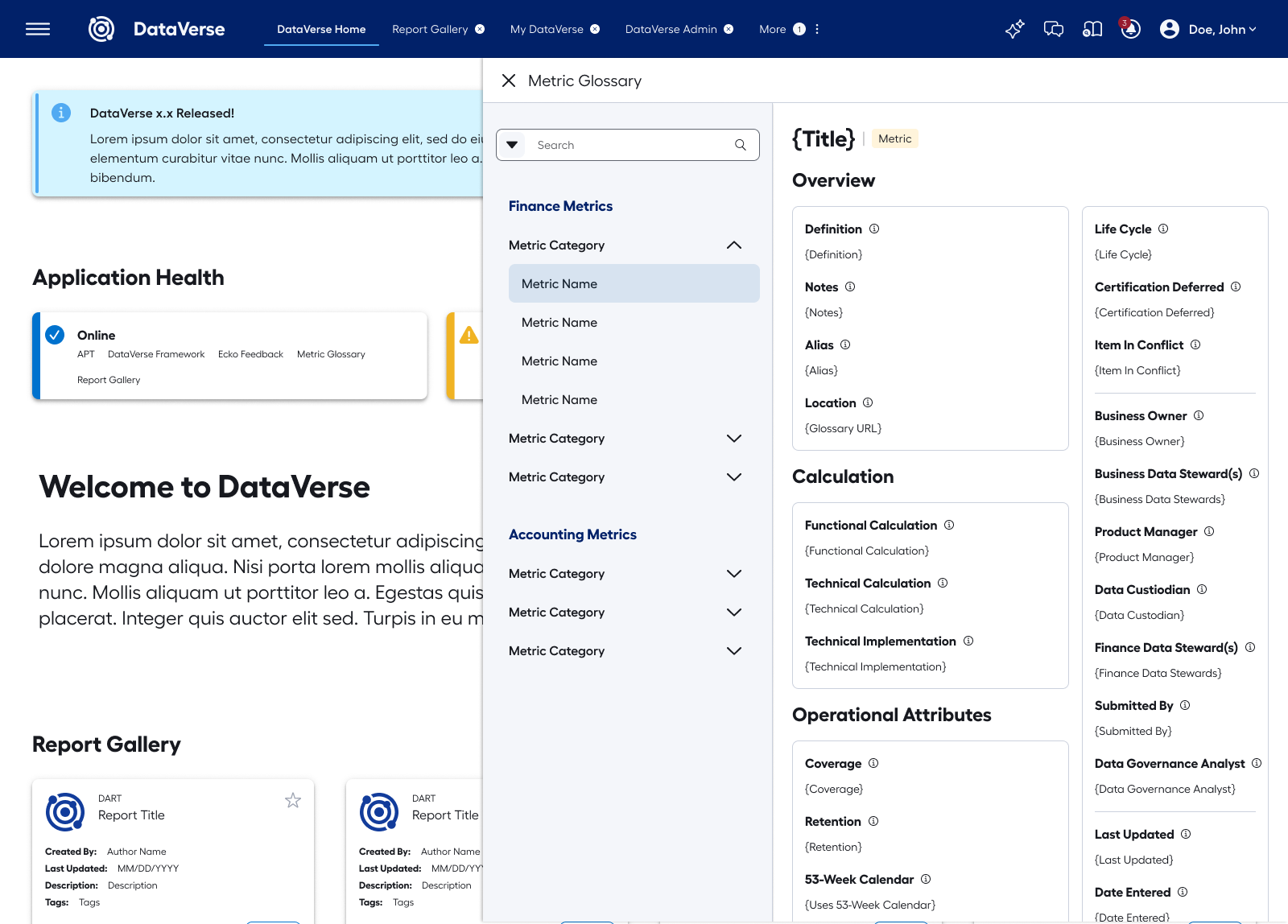
DataVerse metric glossary reference for standardized language and definitions
The Craft

Designing an AI Chatbot That Feels Native

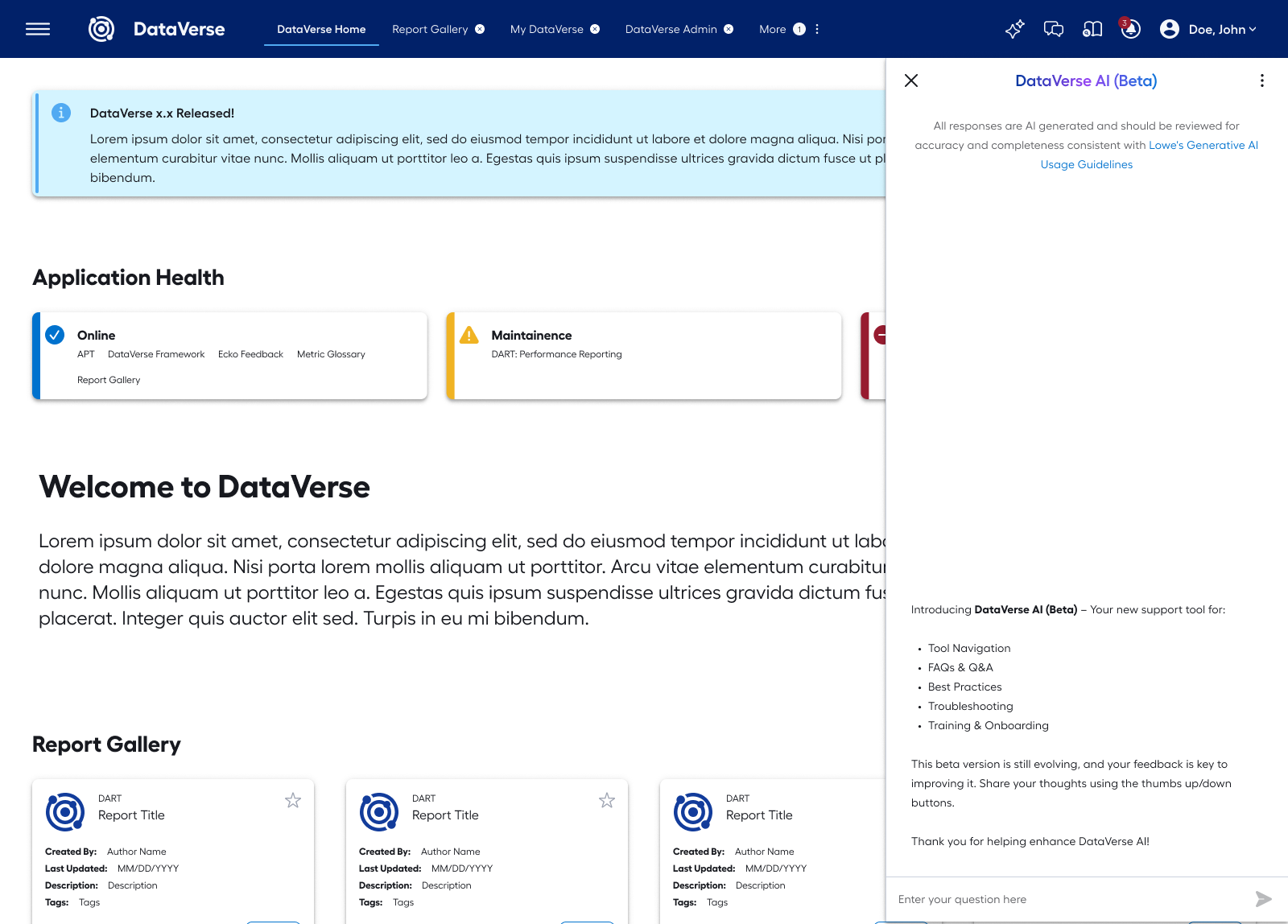
A general-purpose chatbot would have added another place to ask questions without resolving the underlying governance problem. I treated the AI Foundry assistant as a native product layer instead: it cites governed glossary definitions and routes users to the relevant report, owner, or next step. This kept the assistant accountable to DataVerse rather than positioning generated answers as a separate source of truth.

DataVerse AI-assisted reporting view with searchable cards and quick actions
Evolution

Evolving the Experience for Clarity and Scale

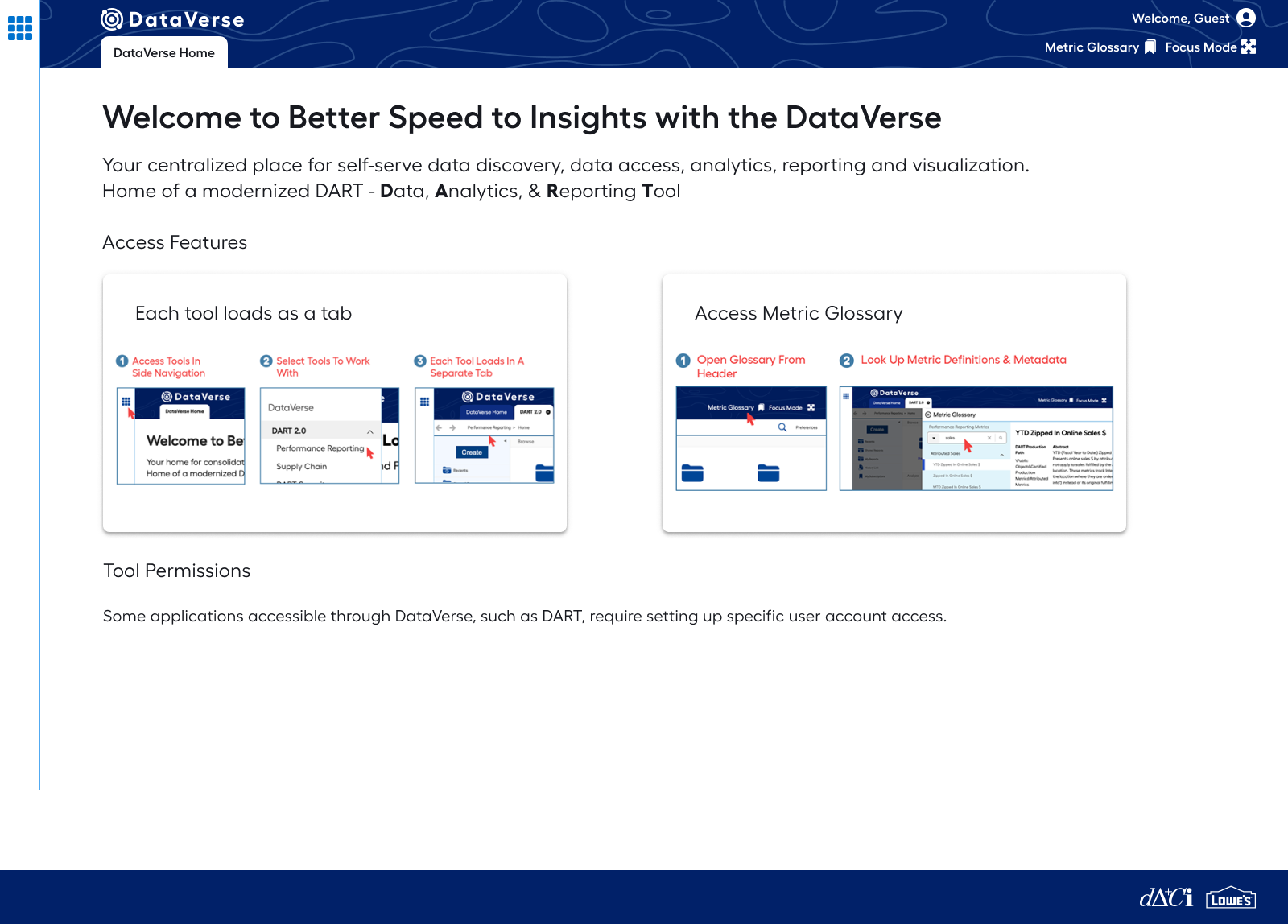
Original DataVerse homepage layout prior to redesign

Legacy Experience

Updated DataVerse homepage with modernized layout and clearer health/status modules

Optimized Experience

The Resolution

Outcomes and Business Impact

3 Functions

Created a shared reporting and governance experience serving Finance, Merchandising, and Supply Chain workflows.

1 Governed Hub

Brought report discovery, metric definitions, ownership context, source health, and AI-assisted guidance into one hub instead of disconnected reporting paths.

In-Context AI

Embedded glossary citations and report routing into the AI assistant so users could verify definitions and reach the right report or owner without leaving the workflow.

Back to Work