Global Architecture

Lenovo HR Knowledge Base

Scaling HR knowledge across 77 countries.

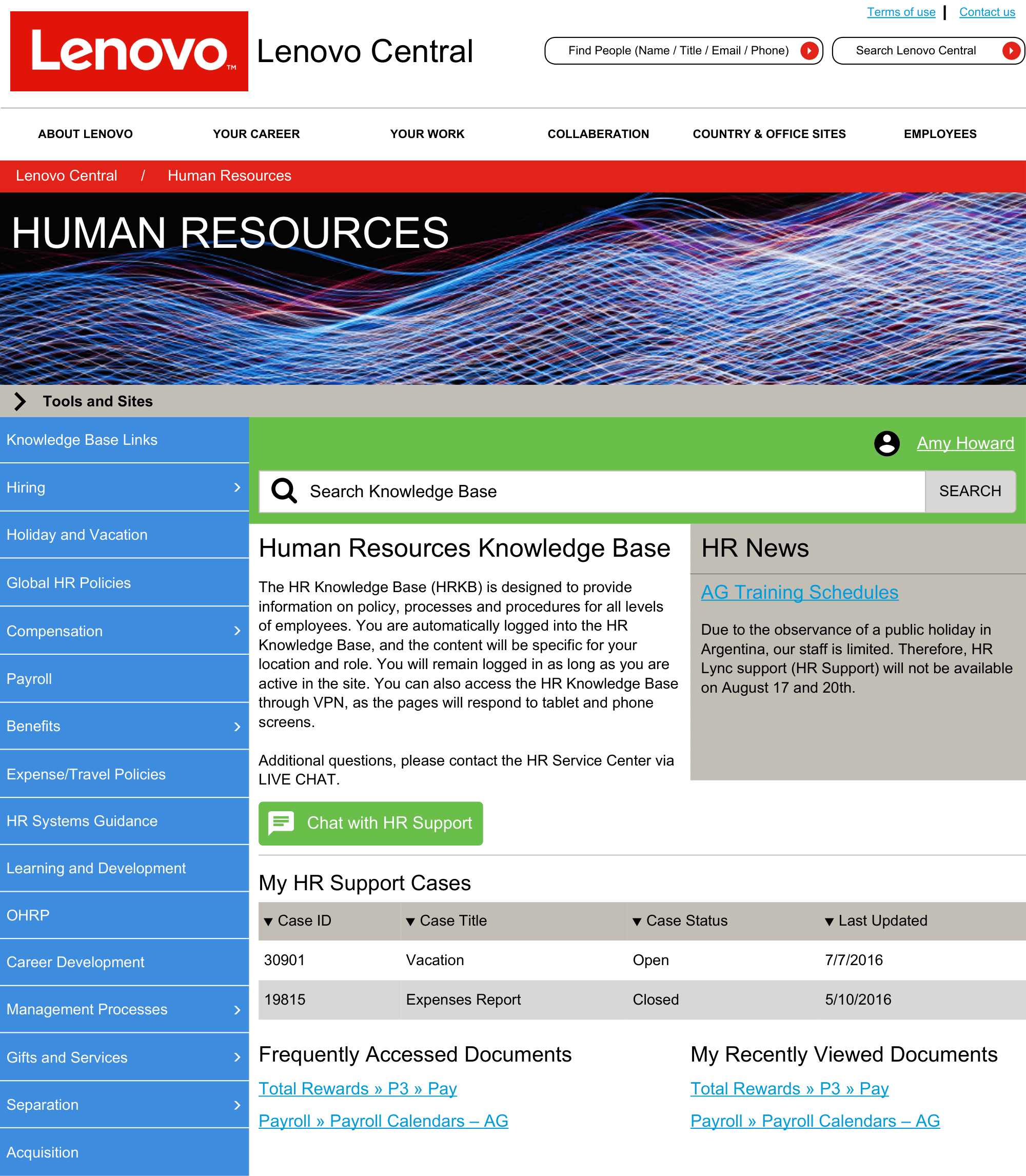
Redesigned a legacy HR intranet into a scalable global knowledge base, improving document findability, regional localization, and support visibility for Lenovo teams worldwide.

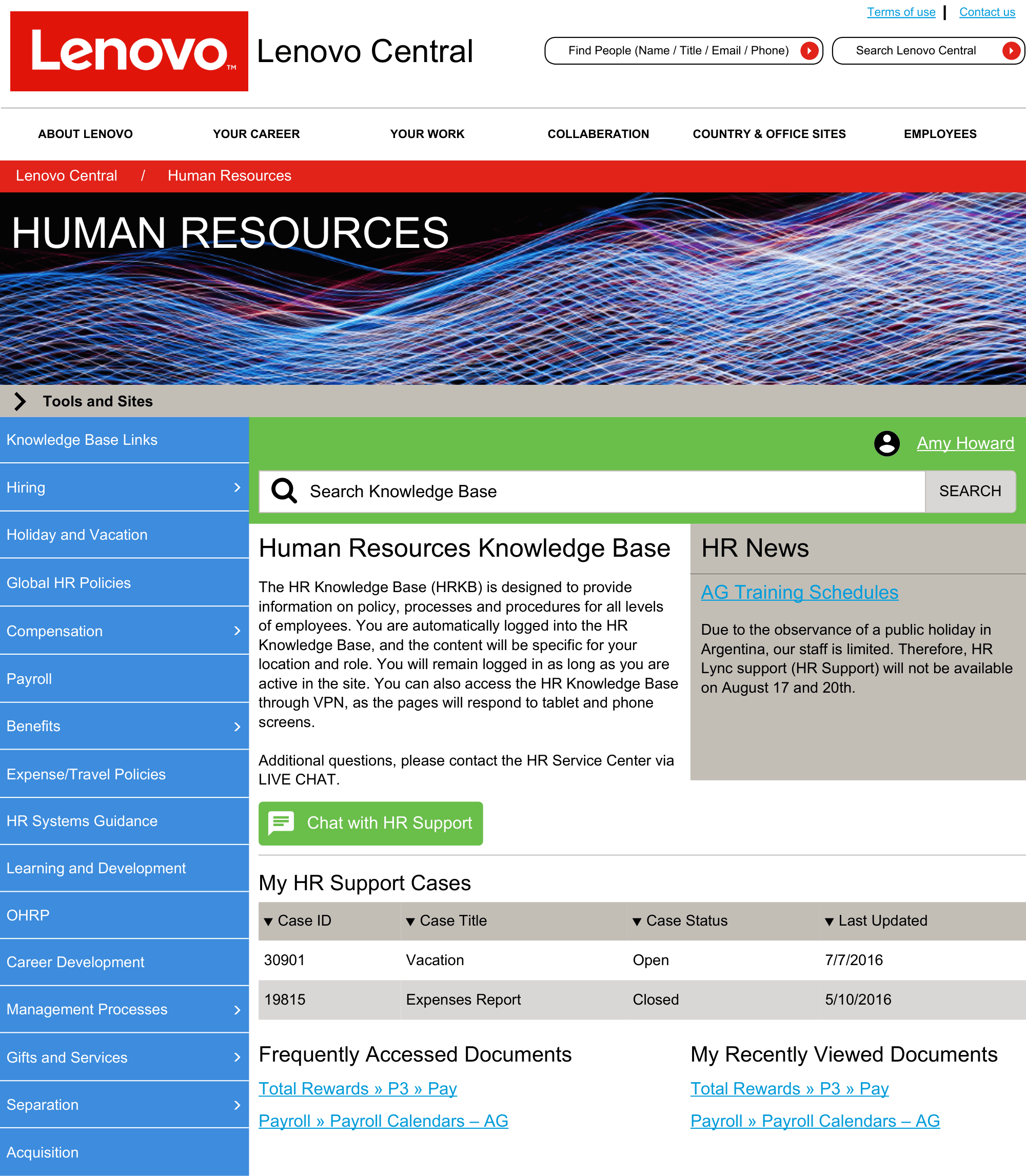
Lenovo HR Knowledge Base dashboard interface

Note on data: All values shown are illustrative and do not represent actual company data.

The Challenge

Scaling a Legacy Intranet for Global Complexity

The HR knowledge base was over a decade old and no longer matched Lenovo's global operating model. Navigation was crowded, search quality was inconsistent, and regional requirements had outgrown the existing horizontal menu system. Teams needed a structure that could scale without sacrificing usability.

Research

Designing for Employees and HR Service Teams

Primary User Profile

Lenovo employees and the HR Service Center (HRSC) teams across the Americas, EMEA, and Asia-Pacific regions.

  • Goal: Find region-specific HR policies quickly and resolve support needs without navigation friction.
  • Pain Point: Legacy IA and weak search made routine tasks slow, especially across regions.
  • Need: A localized portal with reliable search and integrated case visibility.
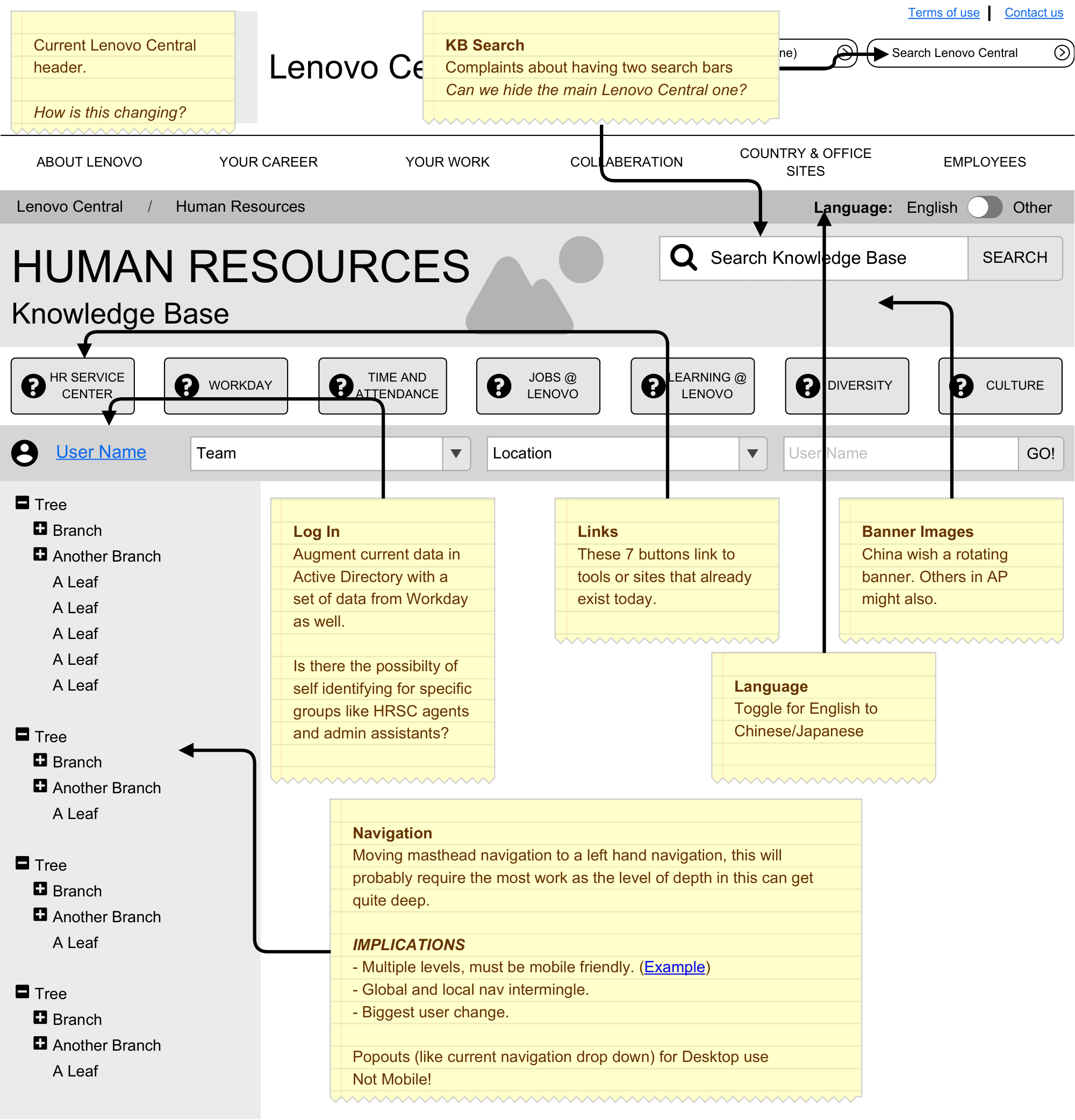
Lenovo research ideation artifact
Infrastructure

Connecting Search, Content, and Support

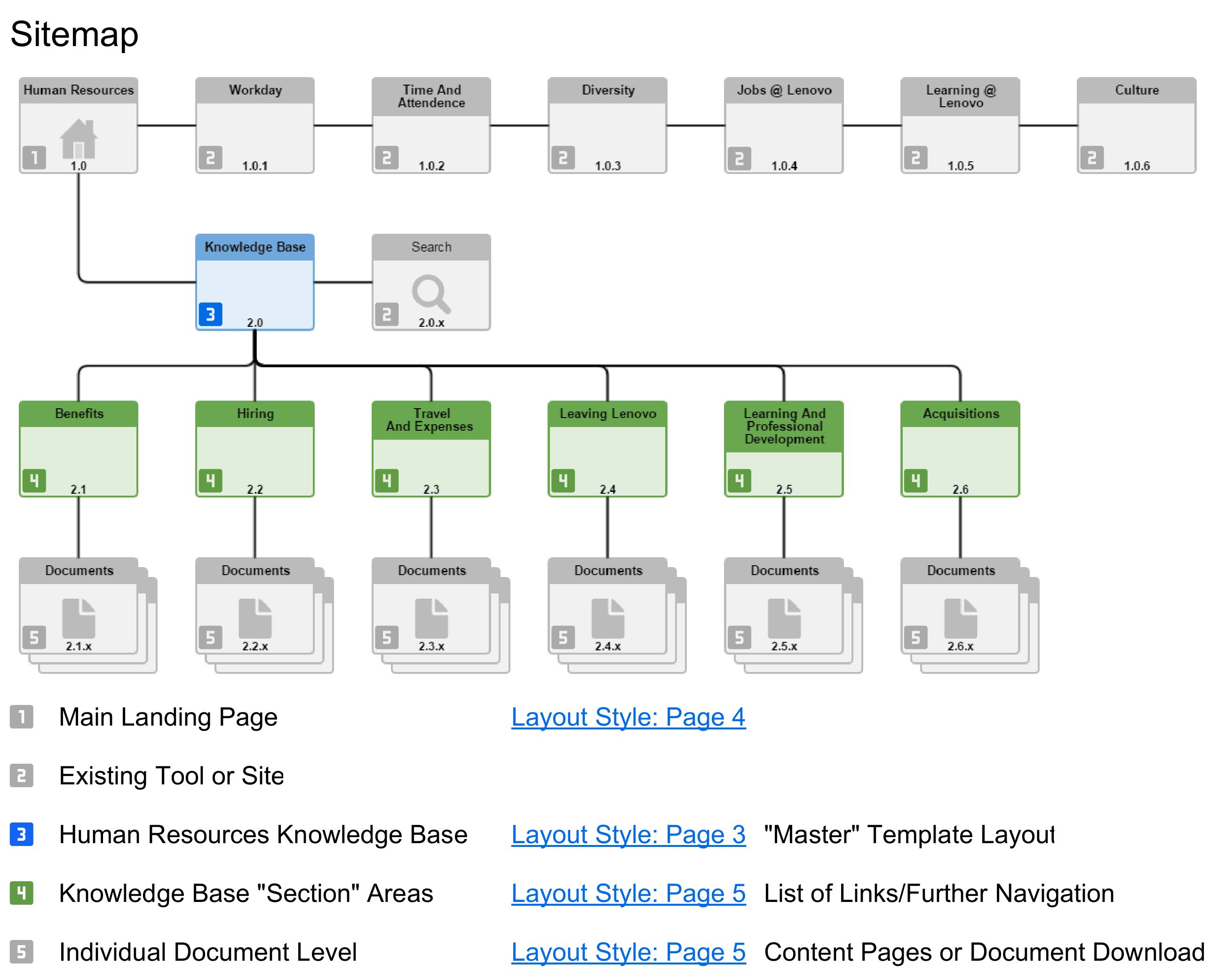
The new ecosystem combined weighted search with Dovetail Help Desk integration, allowing users to find content and track open cases from one portal. Delivery required close coordination with distributed engineering teams across Salt Lake City and Singapore.

Lenovo HR portal sitemap and ecosystem structure
Architecture

Structural Organization

A fixed horizontal navigation model could not absorb more regions, languages, and role-specific content without becoming crowded. I moved the top-level architecture to a vertical model, creating room for location-aware pathways while preserving a predictable structure across markets.

Structure

Roles

    Lenovo employee role view architecture
    The Journey

    Phases of the Design Process

    01

    Discovery

    Collaborated with HRSC teams in Argentina, China, and Slovakia to run card sorting sessions and identify navigation pressure points.

    02

    Exploration

    Eight wireframe iterations tested how much regional variation the architecture could support without fragmenting the global experience. Feedback from distributed teams moved the design toward shared navigation patterns with localized content paths.

    03

    Validation

    Focus groups confirmed the architecture before visual styling was finalized, allowing structural problems to be resolved early and giving stakeholders a common model for regional approval.

    Technical Rigor

    Design Standards

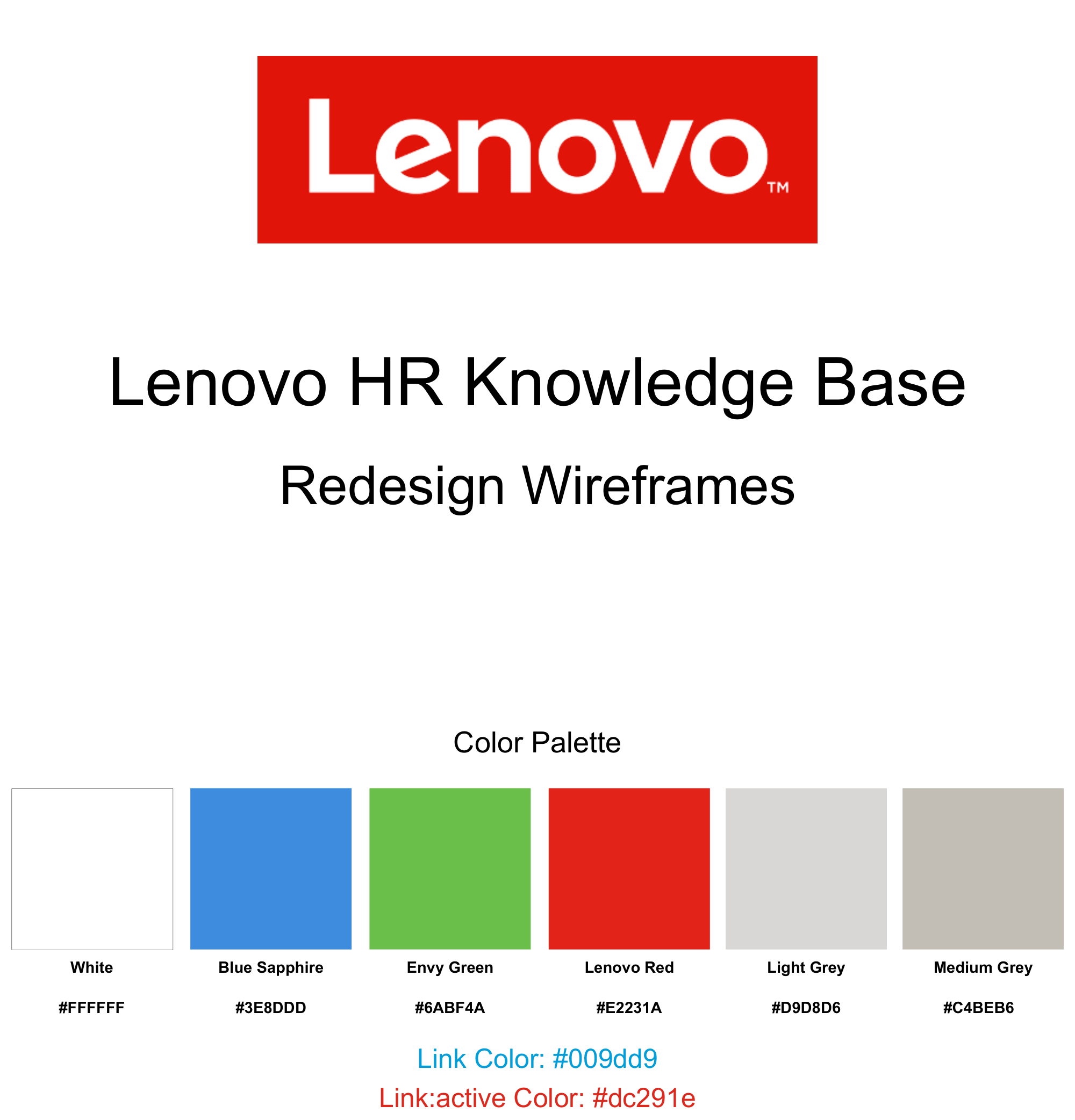
    The final product followed Lenovo brand standards for color, typography, and imagery, while accommodating localization requirements in regions such as China and Japan through tailored UI patterns.

    Localization

    Language toggles and market-specific documentation pathways aligned to regional HR policies.

    Metrics

    Integrated analytics for HRSC teams to track search behavior, content usage, and support demand trends.

    Lenovo branding and color specification reference
    Evolution

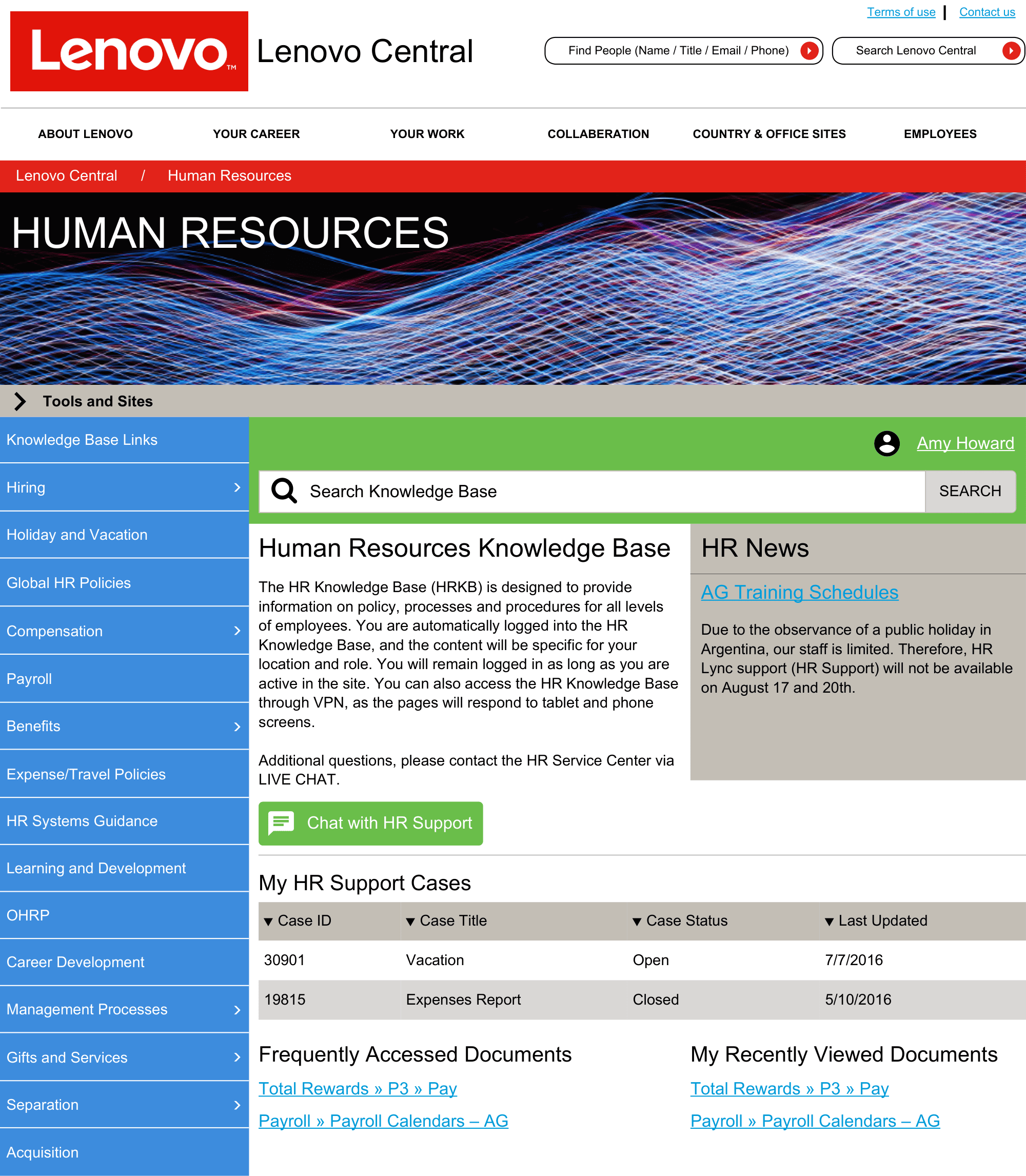
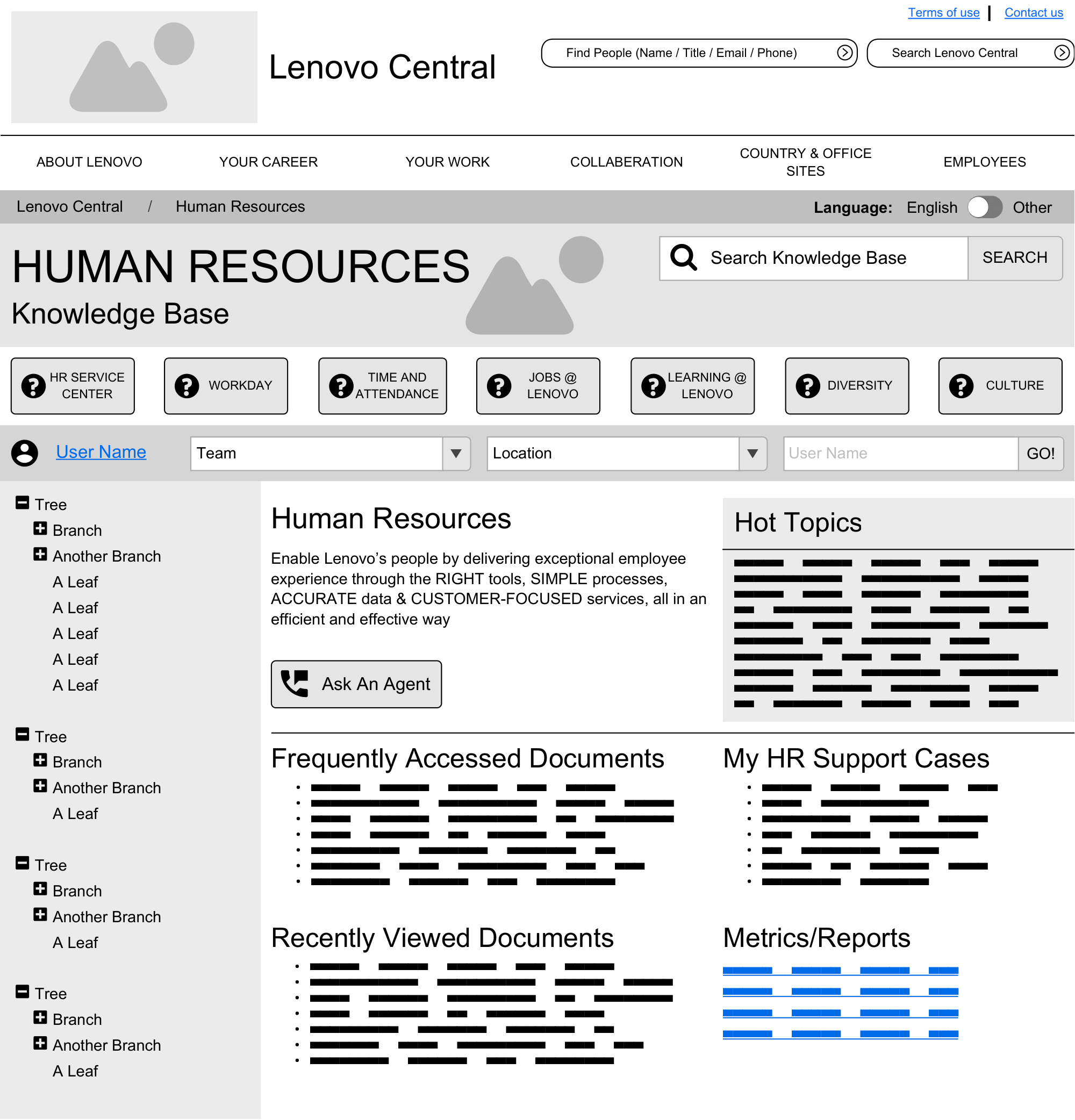
    From Wireframes to Production UI

    Lenovo low-fidelity architecture concept

    Early Low-Fidelity Wireframes

    Lenovo high-fidelity optimized architecture view

    High-Fidelity Experience

    The Outcome

    Business & User Impact

    77 Countries

    Created a scalable intranet architecture for Lenovo's global workforce across the Americas, EMEA, and Asia-Pacific.

    8 Iterations

    Refined the architecture through eight wireframe versions using card sorting, focus groups, and stakeholder feedback from Argentina, China, and Slovakia.

    4 Audience Paths

    Structured role-aware content for employees, managers, HR, and HR Service Center teams while integrating case IDs and status visibility into one portal.

    Back to Work